We can’t stop talking about AI, most of us are torn between how amazing or scary it is, but some of us have shut up and are busy integrating.
This article looks at getting past the chat and toe dipping to start leveraging the power of AI as part of your marketing strategy.
AI Evolution – From Prediction to Prescription
To understand where we are going, let's look at where we started.
Early Days of Clunky Predictive Modelling
Our first taste of AI was almost exclusively predictive. In the mid-2000s, this meant trying to use data to guess what might happen next. It was the era of recommendation engines (think early Amazon: "People who bought this also bought this").
This was cool at the time, but it was difficult to implement, and the ROI was often minimal, as the models were often too general.
Then Real-Time Bidding (RTB) and Programmatic
Then came programmatic advertising. This was the first true application of AI at scale. Algorithms began making split-second decisions on which ad to show which user on which website.
The speed was awesome. Suddenly, we weren't buying "placements"; we were buying "audiences." The AI was managing complexity we couldn't grasp. This was the start of automation managing complexity for us.
Now we have Prescriptive, Generative and Agentic AI
Today, we are in the era of Generative and Agentic AI. This is a profound shift.
Prescriptive AI - tells us what we should do about it.
Generative AI - actually creates the asset we need to do it.
Agentic AI - acts and executes tasks.
Instead of an algorithm just telling me, "User X is likely to churn," today’s integrated AI system can tell me, "User X is likely to churn; send them this specific email offer (which the AI drafted), at 2:14 PM (when they are most likely to engage), using this specific dynamic creative image (which the AI generated)."
This is where the real breakthrough lies: AI is no longer just analysing the game; it’s playing it.
Integrated Martech Stack with AI as the Central Nervous System
I mostly see teams using "point solutions." A separate AI tool for writing blog posts. A separate tool for SEO analysis. A separate tool for social media scheduling.
This creates a siloed, disjointed strategy. It increases your "tech debt" and forces your team to become "tool managers" rather than marketers.
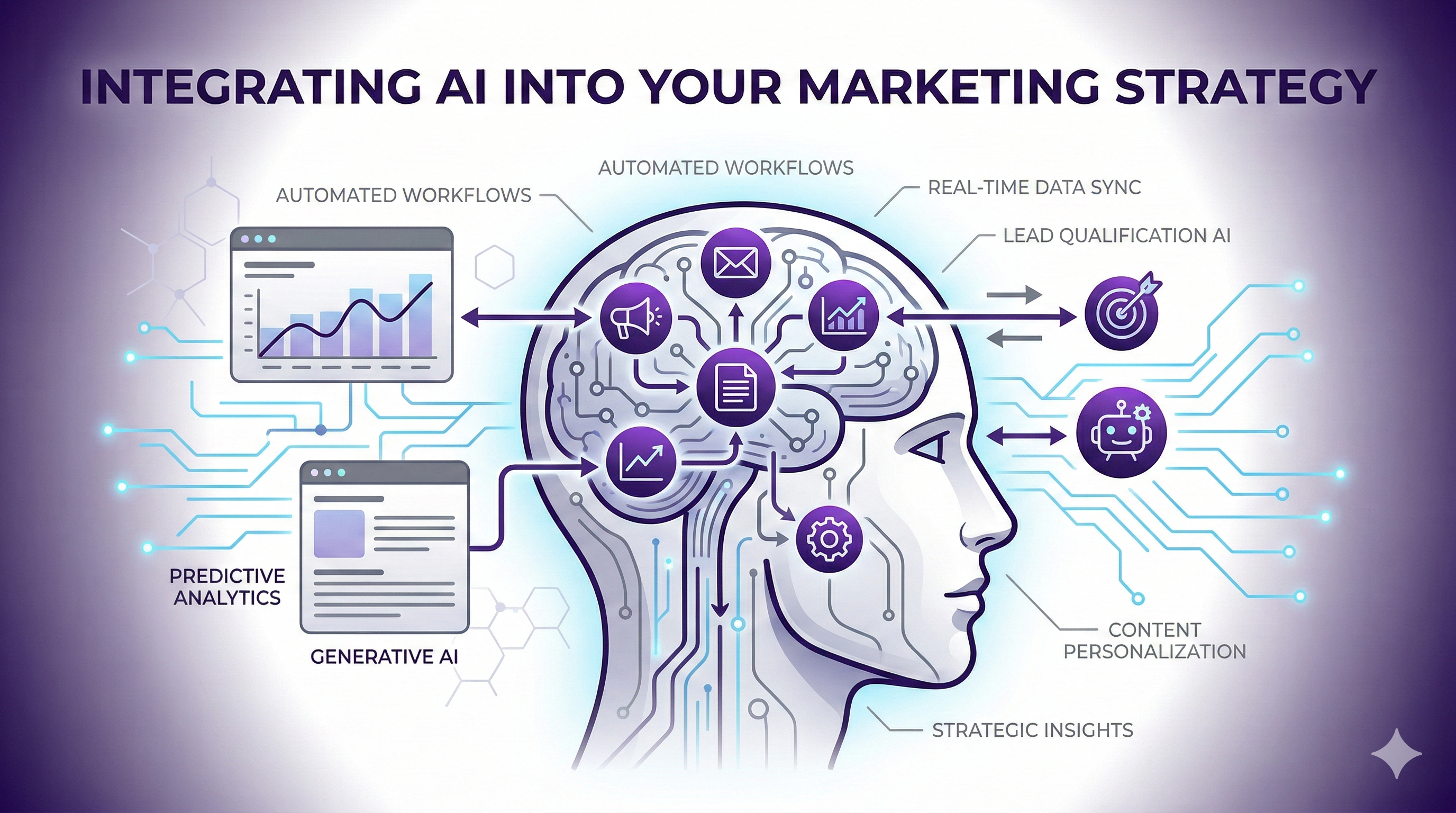
The goal is to build an integrated Martech stack where AI is the central nervous system. This means your stack must communicate.
For example; The insights from your AI SEO tool must flow directly into your AI content creation tool, which then pushes the finalised asset to your AI-powered automation platform.
How to Streamline Your Stack
Identify the Hub: Your CRM (e.g., Salesforce, HubSpot, Zoho) is usually the hub. The AI should be integrated here first. AI that "sits on top" of your CRM can qualify leads, predict deal velocity, and even recommend "next best actions" for salespeople.
Look for Native Integrations First: Before buying a new "AI-powered" point solution, check if your current core tools have added native AI features. HubSpot, Salesforce, Adobe – they have all integrated substantial AI capabilities into their core platforms. Using these is always more efficient than adding a third-party tool.
Use Automation Engines as the Glue: Tools like Power Automate or Zapier are the "glue" that allows point solutions to communicate. A true integrated strategy uses these tools to create multi-step, automated workflows.
Example: If an AI analyses a new customer service ticket and identifies "High Churn Risk," Power Automate can automatically trigger an Outlook task for the account manager, draft a "save" email via Copilot, and move that customer to a "Priority Retention" segment in the CRM.
By streamlining your stack, you increase efficiency and productivity. Your team isn't manually moving data from one tool to another. They are managing the overall system.
Complementing Experience – The Intersection of AI Skills and Strategic Intuition
There is a palpable fear in the industry: "Will AI replace my job?"
After 20 years of seeing new technology "replace" jobs only to create new, more strategic ones, my answer is No. But I will add this caveat: Marketers who use AI will replace the marketers who don't.
The most successful marketers of the next decade will be those who develop strong AI skills to complement their marketing intuition.
View AI Courses
Developing AI Skills
Prompt Engineering is the New Copywriting
Learning how to "talk" to AI is now a core skill. A poorly written prompt gets a generic result. A precisely structured prompt (defining role, task, parameters, format, and tone) generates high-value outputs.
Bad Prompt: "Write a blog post about digital marketing."
Expert Prompt: "Act as a marketing consultant with 20 years experience. Write a 1,200-word blog post in a professional, authoritative, yet approachable tone on the topic 'How to integrate AI into your marketing stack.' Structure the article into three main sections: The Evolution, The Integration, and The Skills. Focus on productivity and efficiency gains. Include dynamic placeholders for images and a final call-to-action."
Data Interpretation, Not Data Entry
You don't need to be a data scientist, but you must be data literate. AI will generate massive amounts of analysis. Your job is to interpret that analysis. If the AI shows you that "User Engagement is down on LinkedIn but up on Reddit," your strategic intuition must decide why that is and how to adjust the creative strategy accordingly.
System Orchestration
The modern marketer is an orchestra conductor. Each AI tool is an instrument. Your skill is making sure the symphony note perfect.
Security, Governance, and Ethics – The Foundation of Trust
Often ignored in the rush to adopt AI when it should be the primary consideration.
If you are building AI into your strategy, you are trusting it with your most valuable asset - Your customer data
The Importance of Security
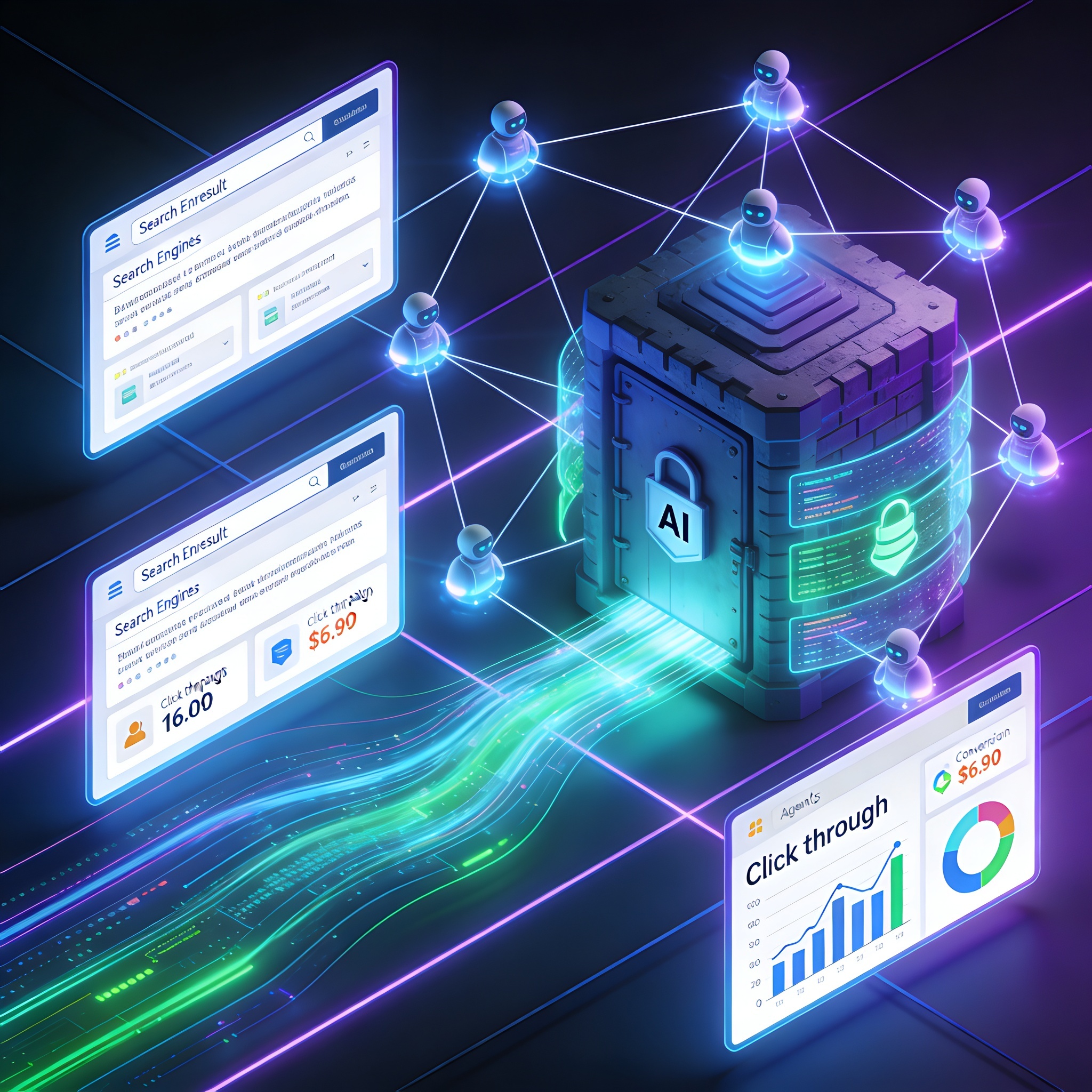
Data Leakage: When you use public AI models (like the free version of ChatGPT), you are often "training" that model with your input. If you paste proprietary customer data, a strategic plan, or financial results into that prompt, that data is now public. This is a catastrophic security breach.
The Solution: Use enterprise-grade AI solutions (like Microsoft Copilot for Enterprise, ChatGPT Enterprise, or native CRM features) that guarantee data privacy. These solutions ensure that your data is used only for your organization and is not used to train the general model.
The Importance of Governance and Ethics
AI Hallucinations: AI is incredibly confident, even when it is completely wrong. You cannot publish AI content without human oversight. If an AI gives you a false statistic or creates a legally problematic claim, your company is liable.
Bias and Fairness: Algorithms are trained on human data, which means they can inherit human biases. A qualified marketer must review AI outputs to ensure they don't propagate harmful stereotypes or unfairly discriminate against certain user groups.
Your AI strategy must have a clear set of guidelines: What data can be used? Who must approve AI-generated content? How do we verify accuracy? Security and governance are the guardrails that keep your AI "race car" from flying off the track.
Conclusion - Start Small, Think Big, Integrate Always
Building AI into your digital marketing strategy is not a "one-and-done" project. It is a fundamental shift in how you operate.
Start small - Pick your top three business challenges, what would save time and improve results if AI was utilised?
Think big - Have a grand vision of how your entire business can be transformed by harnessing the power of AI.
Integrate always - Lead with security, governance and ethics and choose your AI tools with the future in mind.
Integrating is not replacing, don’t neglect the fundamentals or scrap everything you have been doing. Review and evolve, decide what AI can do better or faster and integrate with that first.