I stopped reading the “SEO Is Dead” posts years ago. Even the ones that claim it’s still a thing, so thank you for getting past the title.
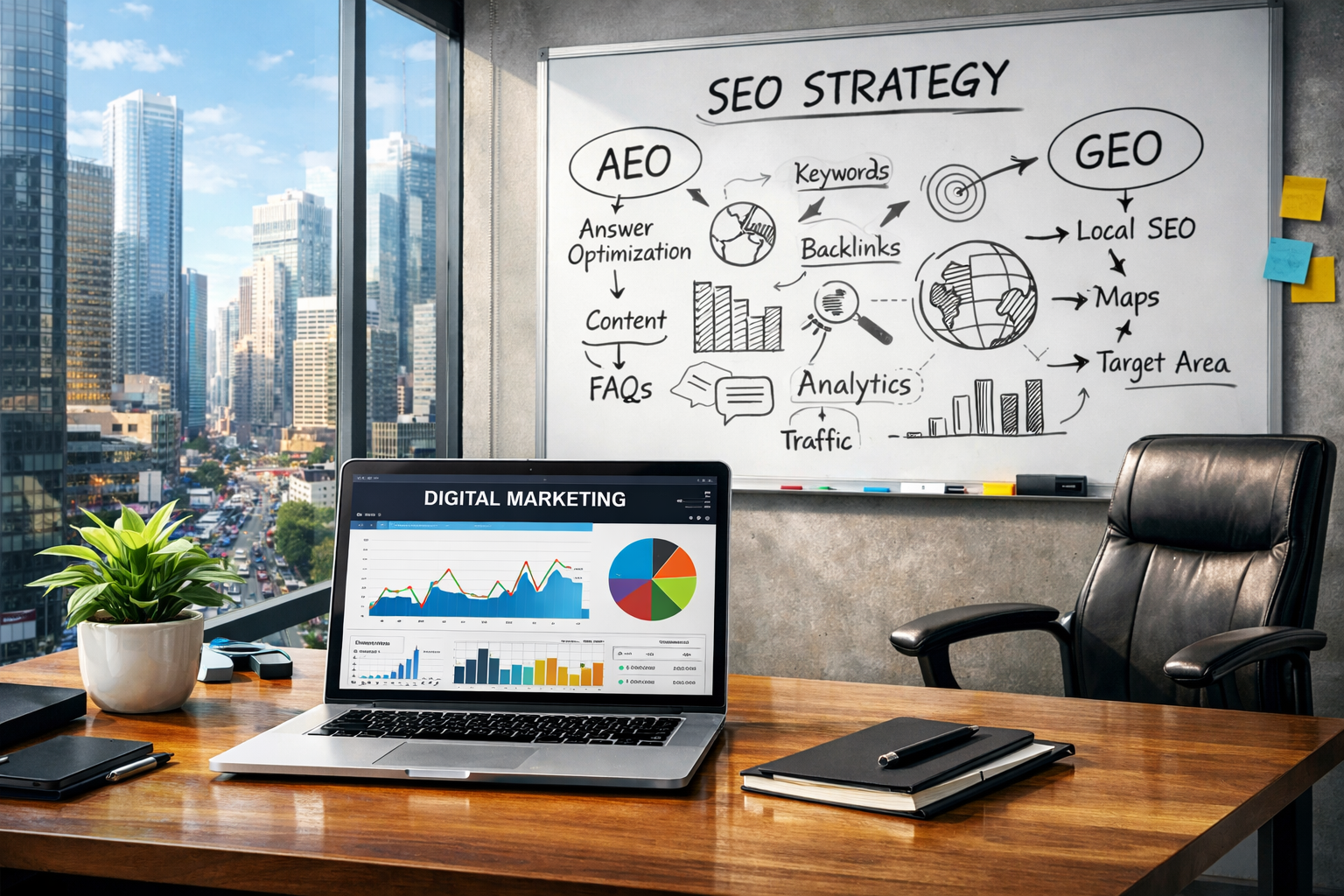
The reality is that Search Engine Optimisation has moved on, forced by the zero click results imposed by platforms to keep the audience locked in and now AI answers leaving SEOs scrambling for citations and rebranding SEO to AEO (Answer Engine Optimisation) or GEO (Generative Engine Optimisation).
Whatever flavour or acronym you want to use, what’s the point? What are we trying to achieve.
What is SEO actually for?
For a long time, we treated Search Engine Optimisation as a mechanical process. We optimised for the google bot obsessing over H1 tags, backlink profiles, and keyword density etc and then we started dedicating time and effort in producing helpful, unique, “Quality Content” and measured success by search position and traffic. All good at the time BTW.
But with "Zero-Click", Google’s Gemini-powered AI Overviews and tools like Perplexity, users are getting their answers directly on the search results page. Click through is falling as people get the "what," "how," and "how much" without ever seeing your logo, so Why bother doing SEO at all?
If the goal of SEO was purely quantitative, to watch a line go up on a Google Search Console graph, then SEO is going to be a losing battle.
SEO in 2026 is about ensuring that when an AI scrapes the internet to summarise a topic for a user, your brand is the source of truth it relies on.
We aren't optimising for clicks anymore; we are optimising for inclusion in the consensus.
AEO / GEO / SEO whatever you want to call it.
Lately, the buzz is all about AEO (Answer Engine Optimization) and GEO (Generative Engine Optimization).
- AEO is the art of structuring your data (schema, FAQ formats, direct definitions) so that voice assistants and "answer boxes" can pull your content.
- GEO is the newer fllavour, focusing on how to influence Large Language Models (LLMs) so that when a user asks ChatGPT or Claude for a recommendation, your brand is mentioned.
Is it worth doing? Yes, but not as a standalone tactic.
If you treat AEO or GEO as a separate "department" from your SEO, you are creating more siloes. Critical thinking tells us that these are all just different facets of Content Marketing.
Whether a human reads your 2,000-word guide or an AI ingests it to provide a 50-word summary, the core requirement is the same: High-quality, unique, and authoritative insight. If you try to "game" GEO by stuffing invisible text for bots, you’ll eventually fail just like the keyword-stuffers of 2005. The "Generative Engine" is smart enough to recognise spam.
The Marketing Machine
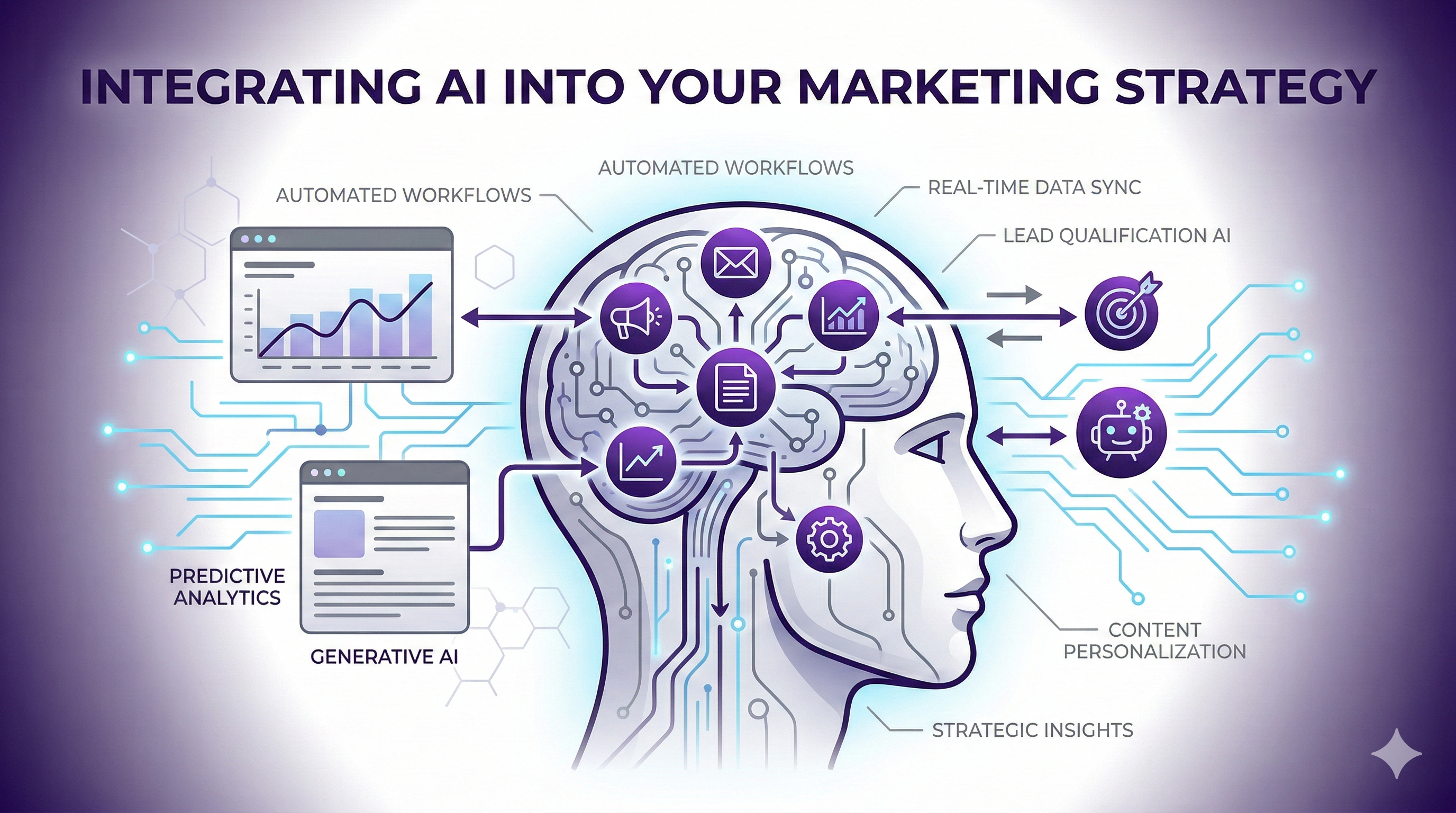
If we stop looking at SEO, AEO, and GEO as digital tasks and look at it as the distribution layer of your content strategy at the core of an overall marketing strategy, we’ll reenforce a narrative that lives across every touchpoint.
There’s a lot of AI-generated noise, what stands out is Primary Research and Point of View (POV). AI can summarise the "average" of the internet. It cannot (yet) provide a case study on how your UK manufacturing firm saved 15% on energy costs through a specific engineering tweak.
That unique data is your "moat." When you wrap that data in SEO (for findability), AEO (for direct answers), and GEO (for LLM training), you aren't just "doing marketing” you’re building an intellectual asset that powers your marketing machine.
Download the Marketing MasterPlan - Strategy development framework.
From Quantitative Noise to Qualitative Signal
I have created thousands of monthly reports that start with traffic volumes and impressions.
These are quantitative metrics that are becoming increasingly unreliable. If a user gets the answer to their problem from an AI Overview that cited your site, but they never clicked, your "Traffic" is zero. But your "Impact" is 100%.
We must move further towards qualitative measurements of success.
What does that look like?
- Brand Salience: When your sales team talks to a prospect, does the prospect say, "I saw your name mentioned in an AI summary about [Topic]"?
- Peer Engagement: Are people discussing your insights in closed groups, events or boardrooms where they can’t be tracked, but where decisions are made?
- High-Intent Conversion: Instead of 10,000 "tyre kickers," are you getting 10 "Ideal Customers" who reached out because your content solved a specific problem for them?
The key marketing objective hasn't changed: Get your message to the right people at the right time.
Conclusion
Why bother doing SEO? Because it’s a key part of your overall marketing strategy.
Why bother with AEO and GEO? Because that’s where the world is asking its questions.
Why bother with a holistic strategy? Because a message without a plan is just noise.
As we move forward, don't ask your team "How do we get more clicks?" Ask them: "Is our message engaging our audience?"
That’s the shift from tactical SEO to Strategic Marketing.
Download the Marketing MasterPlan - Strategy development framework.